Werner Herzog looks at the young soldiers who make up the Miskito Indian rebel army. The Indians are an abused minority who sided with the Sandinistas in the Nicaragua civil war. However once the Sandinistas won the Indians were once more an abuse minority and had to fight once more for their rights.
The first part of the film deals with the war itself and how the adults are handling it. The second part of the film deals with the 10,11 and 12 year olds who are being recruited into the fight be...
Original title: Die Fliegenden Ärzte von Ostafrika
Herzog documentary takes a look at some volunteers in Africa who fly around to various rural parts just to perform operations and spread the word about medicine. Even though the doctors try their best they are often met with people who either refuse to listen or are afraid of what they are actually trying to do. This is yet another fascinating film from the German director who of course would go onto make some of the best documentaries out the...
I'm invariably surprised when I mention this film to friends that they say they've never seen it. Werner Herzog in Australia? C'mon. How could the great German director of Wozzeck, Nosferatu and other Gothic classics concern himself with a very oblique tale of a development project impeded by Aboriginal Australians who contend that disturbing the green ants dreams by ripping up their habitat will likewise rip the fabric of the universe? The government solution is to give them an airplane which o...
Werner Herzog's first film is about a young man who works out hoping to become very muscular one day. Nothing too interesting here
dream come true for art-house film buffs, and anyone whose out looking for an interesting way to spend 90 minutes. This is perhaps one of the most amazing collection of short films. The secret lies in the vast variety of genre and style of the films. From pure eye-candy to dramatic documentaries. In a collection like this, there is no such thing as "out of place". I found all the films enjoyable and interesting. For me, the weakest segment was the Wim Wenders film. It felt like an episode of a m...
Werner Herzog's upsetting, black and white, documentary-like EVEN DWARFS STARTED SMALL concerns the rebellion of a handful of dwarves against the institution in which they are inmates. No average-sized actors appear - just the buildings, furniture and accessories that have been constructed for (and seemingly abandoned by) them. Herzog pulls a double whammy by getting his audience to identify with his performers - indeed, they are shown to express great sensitivity and pain - but doesn't cop out ...
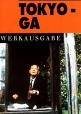
Wim Wenders attempts to turn his first trip to Japan into a homage to Ozu and an exploration of Japanese modernity, contrasted with the images of a bygone era glimpsed in Tokyo Monogatari.
This is a deeply personal film, an unabashed pilgrimage by Wenders in search of his muse. His rambling narration, impenetrable at times, offers little insight on Japan. What first-time visitor can encapsulate a city as complex as Tokyo? The film works better on the subject of Ozu, the interviews with actor Ch...
This is an amazing experience, becoming more so the further we get from it. When I see 'Apocalypse Now, or even 'Mosquito Coast' I see this. In fact whenever I see both an actor AND a director/writer risking all in a coordinated way, I see this. And when I see a combination of fictional documentary and highly stylized poses, a memory of this glistens.
I highly suggest a periodic refresh-viewing of this film on a big screen, followed of course by 'Fizcarraldo.' with some life-affirming experienc...

Wim Winders directed this somewhat interesting documentary filmed during the 1982 Cannes Fil Festival. Winders set up a camera in a hotel room and he'd ask various directors to come in and say what they thought about the future of cinema. Werner Herzog, Steven Spielberg, Michelangelo Antonioni, Jean-Luc Godard, Paul Morrissey and various others take part and offer their thoughts on the subject. The opinions very from Herzog not fearing the future to Spielberg showing high concern over the budget...
在这部让人灵魂激荡的纪录片中,讲述了野生动物保护主义者蒂莫西·崔德威尔对熊的生死恋歌,在崔德威尔的有生之年里,共有13年丝毫不设防备的同灰熊生活在一起,影片记录了他最后5年的惊险经历。
1989年夏天,蒂莫西•崔德威尔开始了他的第一次阿拉斯加洲之旅,他在麦克尼尔河国家狩猎动物禁猎区中宿营时第一次见到了大灰熊,那次经历激发了崔德威尔的疯狂灵感,从此决定将一生都致力于灰熊及其栖息地的保护工作。
Every Man For Himself and God Against All aka The Enigma of Kaspar Hauser is a prime slice of pre-nutter-in-the-jungle Werner Herzog and makes an interesting companion piece to Truffaut's L'Infant Sauvage/The Wild Child. Where Truffaut used his true story of a foundling more animal than boy as proof of the human soul, Herzog uses the real-life mystery of Hauser as a means of showing that society's accepted way of looking at the world may not necessarily be the most valid – as demonstrated when ...
This movie is far from perfect, but there are a few scenes here and there that are absolutly hair-raising : Kinski in a state of total exaustion at the begining, the scene in the woods when he starts to hear voices and the unbeleivable murder scene consisting of two shots disguised as one that last about 5 minutes in slow motion (it has to be seens to be beleived). The use of music is fantastic, the photography impecable. Herzog does as usual and captures another world while Kinski is plainly li...